Evergreen, Colorado Real Estate - How Five Years Changed Everything

Evergreen, Colorado Real Estate
How Five Years Changed Everything — and What Still Holds True
Data from REcolorado® Local Market Updates: August 2021 & March 2026 | Jefferson County, Colorado
Danny Skelly, REALTOR® | OrsonHillRealty.com | FoothillsRealty.com | eXp Realty | 303-503-8793
Evergreen, Colorado Real Estate
If you want to understand what has happened to mountain real estate in Colorado over the past five years, Evergreen tells the story better than almost anywhere else. Not because it is an outlier — but because it is a perfectly clear example of how a fundamentally desirable community moves through extraordinary market conditions and comes out the other side still standing, still expensive, and still deeply sought after.
This report draws on two REcolorado® Local Market Update snapshots — one from August 2021 at the absolute peak of the pandemic-driven buying frenzy, and one from March 2026 as the market finds its footing after years of rate-driven turbulence. Together, they tell a story of transformation that every buyer, seller, and long-term property owner in the Evergreen foothills should understand.
August 2021: When the Market Lost Its Mind
There is no polite way to describe the Evergreen real estate market in August 2021 other than to call it what it was — one of the most extreme seller's markets this community had ever seen. Everything that could tip in favor of sellers had tipped, all at once.
Active inventory had collapsed to just 64 homes — down nearly 38% from the already-thin 103 listings that existed in August 2020. For a mountain community spread across dozens of square miles of Jefferson County foothills, 64 homes on the market is an almost laughably small number. Buyers were competing for scraps.
The reason was obvious in retrospect, even if it felt disorienting in real time. The COVID-19 pandemic had fundamentally rewired how people thought about where they wanted to live. Millions of knowledge workers along the Denver Front Range suddenly found themselves working from home — and that daily 45-minute drive from Evergreen to Denver no longer mattered. What mattered was space, trees, elk in the yard, and a mountain backdrop out the window. Evergreen had all of that, and buyers descended on it.
Supply could not keep up. Not even close.
The Numbers Tell the Story
Key Metric
August 2020
August 2021
Change
Active Listings
103
64
-37.9%
New Listings
70
66
-5.7%
Closed Listings
84
73
-13.1%
Days in MLS
41
20
-51.2%
Median Closed Price
$658,750
$765,000
+16.1%
Average Closed Price
$752,620
$968,190
+28.6%
Close Price to List Price
99.2%
100.5%
+1.3%
The number that stands out most, even now, is 20 days in MLS. That was the average time a home spent on the market in August 2021 — down 51% from 41 days a year prior. Twenty days means homes were going under contract in the first weekend in many cases. It means buyers had no time to think, no time to negotiate, and no room to ask for anything. You either moved fast and overpaid, or you lost.
And overpaying was, technically, the norm. The closed-price-to-list-price ratio hit 100.5% — meaning the average Evergreen home sold for more than it was listed for. The year-to-date figure was even more striking: 103.6% through August 2021. Sellers were using list prices as a starting point, not a ceiling, and the market was obliging them.
Prices surged accordingly. The median closed price reached $765,000 in August 2021, a 16.1% jump from $658,750 the year before. The average closed price came in at $968,190 — up an extraordinary 28.6% — and the year-to-date average of $985,173 was knocking on the door of a million dollars. Evergreen was transforming from a desirable mountain community into a seven-figure market in real time.
What made this especially remarkable is that supply was stubbornly refusing to respond to price signals. Normally, surging prices bring out sellers. In 2021, they largely didn't — because sellers had nowhere to go. They'd be trading their 3% mortgage for another seller's inflated asking price, and the math didn't work. So they stayed, inventory stayed tight, and buyers kept fighting over whatever came to market.
The year-to-date data through August 2021 confirms this wasn't a blip. Closed listings were up 14.5% compared to the same period in 2020 (481 vs. 420), meaning the market was both fast and active. New listings had increased only 6.3% year-to-date — nowhere near enough to satisfy demand. The entire first eight months of 2021 looked exactly like August did: compressed, competitive, and relentless.
March 2026: A Different Market, Not a Broken One
By March 2026, Evergreen looks different. The frantic energy of 2021 is gone. Buyers have time to think. Sellers have to work for it. And the numbers, at first glance, might make someone who only watched the 2021 market nervous.
They shouldn't be.
What the March 2026 data actually shows is a market going through a healthy, overdue normalization — not a collapse. Prices are down modestly from their peak. Inventory is up substantially. Days on market have stretched out. But the fundamentals that made Evergreen worth buying in 2021 haven't gone anywhere.
Where Things Stand in Early 2026
Key Metric
March 2025
March 2026
Change
Active Listings
117
158
+35.0%
Pending Listings
47
51
+8.5%
New Listings
70
88
+25.7%
Closed Listings
46
34
-26.1%
Days in MLS
39
47
+20.5%
Median Closed Price
$960,000
$921,500
-4.0%
Average Closed Price
$1,198,815
$1,163,758
-2.9%
Close Price to List Price
99.2%
98.4%
-0.8%
Active listings have climbed to 158 homes — up 35% year-over-year and nearly two and a half times the 64-listing trough of August 2021. That is a real and meaningful change for buyers. Where 2021 offered almost no choice, 2026 offers variety, breathing room, and the ability to be selective.
Days in MLS have extended to 47 days for March 2026, up from 39 a year prior. The year-to-date average is 68 days — up 30.8% from the same period in 2025. For buyers, this is welcome news: 47 days means you can actually conduct an inspection, consult with a lender, review HOA documents, and make a considered decision. For sellers, it means pricing discipline matters in a way it simply did not in 2021.
The median closed price sits at $921,500 in March 2026, a 4.0% decline from $960,000 in March 2025. The year-to-date median of $900,000 is down 4.8% from the same period last year. These are real corrections — but they need context. The median in August 2021 was $765,000. Even after the softening, Evergreen's median price is roughly $156,000 higher than it was at the height of the pandemic boom. Sellers who bought before 2022 are sitting on substantial equity.
The average closed price of $1,163,758 tells a similar story. Down 2.9% from $1,198,815 in March 2025, but comfortably above the million-dollar threshold the market first approached in late 2021. The luxury tier of the Evergreen market — the equestrian estates, the lakefront properties, the high-country retreats — remains intact and in demand.
Transaction volume has declined. Closed listings fell 26.1% in March 2026 compared to March 2025, and are down 4.4% year-to-date. This is the most direct expression of the affordability math that has been reshaping mountain real estate since 2022: when 30-year mortgage rates are sitting in the 6–7% range, the monthly payment on a $900,000 home is a different conversation than it was at 3%. Fewer buyers can qualify, and some who can are waiting to see if rates improve further.
But here is the number worth paying attention to as a leading indicator: pending listings are up 8.5% year-over-year, with the year-to-date pending total of 111 up 4.7% from 106 in the same period last year. Pending sales are contracts that haven't closed yet — they're the forward signal. And that signal, heading into spring 2026, is pointing toward more activity, not less.
Five Years in the Rearview Mirror
Putting both snapshots side by side reveals just how much the market has moved — and how much it hasn't.
Metric
Aug 2020
Aug 2021
Mar 2025
Mar 2026
Active Listings
103
64
117
158
Days in MLS
41
20
39
47
Median Closed Price
$658,750
$765,000
$960,000
$921,500
Average Closed Price
$752,620
$968,190
$1,198,815
$1,163,758
Close/List Ratio
99.2%
100.5%
99.2%
98.4%
What stands out from that table is the price column. Despite everything — the rate shock of 2022 and 2023, the transaction volume decline, the inventory expansion — prices are dramatically higher today than they were five years ago. The average closed price has gone from $752,620 in August 2020 to $1,163,758 in March 2026. That is more than $400,000 in appreciation over five years, even accounting for the recent softening from the 2024–2025 peaks.
That is not the story of a market that got lucky during a pandemic and then gave it all back. That is the story of a market with structural demand that absorbed an extraordinary demand event and settled at a fundamentally higher price level.
The close-to-list ratio is equally telling. It peaked at 100.5% in August 2021 — buyers paying above asking. In March 2026 it sits at 98.4% — buyers paying 1.6% below asking on average. In a luxury mountain market, that is not a crash. That is normal. That is healthy. A seller pricing their home well can still expect to get within a percent or two of asking price.
What the five-year arc also makes clear is the role of mortgage rates in shaping this market. The buying frenzy of 2021 was not purely about Evergreen being more desirable than it had ever been — it was partly about money being effectively free. At sub-3% rates, buyers had purchasing power that has not existed before or since. When rates rose sharply in 2022 and 2023, that purchasing power evaporated, and with it went the volume of qualified buyers willing to transact at peak prices. The price corrections since then are rational, not panicked.
What This Actually Means If You're Buying or Selling
If You're Buying
This is a genuinely better market to buy in than 2021 was, even at higher prices — and that might sound counterintuitive, so let me explain.
In 2021, you were buying blind. You were waiving inspections, writing escalation clauses, skipping contingencies, and making six-figure decisions in 24-hour windows. You had no leverage, no information, and no ability to say no. And you were paying above asking price to do it.
In March 2026, you have 47 days of average market time on your side. You can get an inspection. You can negotiate. You have choices — 158 of them. The close-to-list ratio means there is real, actual room to negotiate a price that wasn't there in 2021. That is worth a great deal, and it's something that doesn't show up cleanly in any single data point.
The honest caveat is borrowing costs. At current rates, the monthly payment on a $921,500 home with 20% down is meaningfully higher than it was on the same home during the pandemic years. Buyers need to do their math carefully and honestly. Rate buydowns, adjustable-rate products, and seller concessions are all tools that are available in this market in ways they weren't in 2021 — and working with a lender and agent who understand how to structure those deals can make a real difference.
The longer-term question — should I buy or wait for rates to drop? — is one that only you can answer for your situation. What the data does tell you is that Evergreen prices have historically rewarded buyers who got in rather than those who waited. If rates drop significantly, demand will re-accelerate and prices could move higher. The buyers who benefit most from a rate drop are the ones who already own.
If You're Selling
The 2021 playbook no longer applies, and the sooner sellers accept that, the better their outcomes will be.
In 2021, you could essentially name your price and buyers would find a way to meet it. That dynamic is over. Today, you are competing with 158 other active listings for a more limited pool of buyers who are also dealing with higher borrowing costs. Overpricing is not just a minor tactical error — it is a strategy that will cost you time, money, and momentum as your listing ages on the market.
The good news is the close-to-list ratio. At 98.4%, sellers who price accurately are still getting very close to their asking price. The market hasn't become adversarial toward sellers — it has just become honest. Come in at the right number, present the home well, market it aggressively, and you can still get an excellent outcome.
It's also worth keeping perspective on where your equity stands. If you bought before 2022, you have likely seen substantial appreciation even after the recent correction. Selling in a softer market doesn't mean selling at a loss — in most cases it means cashing out a gain that would have been unimaginable five or six years ago.
Why Evergreen Keeps Holding Its Value
None of this analysis makes sense without addressing the question underneath it: why does Evergreen command these prices at all? Why, through rate shocks and price corrections and reduced transaction volume, does this market stay stubbornly expensive?
The answer is geography, and you can't manufacture more of it.
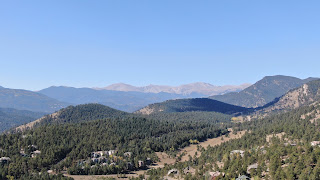
Evergreen sits at roughly 7,000 feet in the Front Range foothills, 30 miles west of Denver. It is close enough to the city to be practical — DIA is accessible, major employers are reachable, cultural amenities are a reasonable drive. But it feels nothing like Denver. Elk walk through residential neighborhoods. The lake at the center of town freezes for skating in winter. Mount Blue Sky sits on the horizon. The air is different. The light is different. The whole pace of life is different.
Jefferson County Open Space surrounds the community with thousands of acres of trails, meadows, and wilderness. The Jefferson County School District consistently ranks among the strongest in Colorado. Crime is low. The community has been established long enough that it has real character — independent businesses, a genuine downtown, neighbors who know each other.
None of this is replicable. You cannot build another Evergreen in a cheaper location. The supply of mountain real estate with this combination of attributes — natural beauty, community infrastructure, school quality, and proximity to a major city — is permanently limited. That permanent scarcity is what underpins prices through rate cycles, market corrections, and economic uncertainty.
The remote work revolution also left a permanent mark on this market's demand profile. Even as return-to-office pressures have moderated the most extreme versions of work-from-anywhere flexibility, hybrid work arrangements remain widespread among the professionals who constitute the primary Evergreen buyer pool. The group of people for whom Evergreen is a realistic primary residence option is structurally larger today than it was in 2019, and that doesn't reverse easily.
The luxury tier of the market reinforces this further. With an average closed price consistently above $1 million, Evergreen now attracts a buyer who is often less rate-sensitive — someone making a substantial down payment or paying cash, someone for whom the decision to live in the mountains is a lifestyle choice rather than a financial calculation. These buyers are resilient to rate fluctuations in ways that first-time or move-up buyers are not.
Where the Market Goes From Here
The March 2026 data suggests a market at an inflection point. Inventory is up, pending sales are rising, new listings are coming in at strong numbers, and prices have stabilized after a period of modest correction. The ingredients for a more active spring and summer market are in place.
The single biggest variable is interest rates. Any meaningful move toward 5.5–6.0% on 30-year fixed mortgages would release significant pent-up demand from buyers who have been qualified but cautious. There is a substantial cohort of people who want to live in Evergreen, can afford to buy in Evergreen, and have simply been waiting for a more favorable rate environment. When that environment arrives — whether in 2026 or beyond — transaction volume is likely to respond quickly.
New supply will not bail the market out. Jefferson County's terrain, wildfire mitigation requirements, and restrictive zoning make large-scale new construction in the Evergreen area effectively impossible. Whatever inventory growth comes will come from existing homeowners deciding to sell — not from developers flooding the market with new product. That structural supply constraint has been a consistent feature of this market for decades, and it will continue to support price floors.
The near-term risks are real. If rates stay elevated, transaction volume stays suppressed. If broader economic conditions weaken — equity markets decline, employment softens, consumer confidence falls — demand for discretionary luxury real estate like mountain homes tends to decline with it. Insurance costs have also risen meaningfully for Colorado mountain properties due to wildfire risk assessments, and those elevated operating costs represent a headwind to affordability that is independent of purchase price.
But the long view favors Evergreen. It always has. Buyers who purchased at what felt like the peak in 2019 were very happy by 2021. Buyers who purchased in 2021 saw prices move against them temporarily but sit on substantial long-term equity. The community's fundamentals — the ones that have nothing to do with interest rates or macroeconomic cycles — remain as strong as they have ever been.
The Bottom Line
Two REcolorado® data snapshots — one from August 2021, one from March 2026 — capture Evergreen at two very different moments. In 2021, the market was operating at an extreme that couldn't last: 20-day average time to contract, buyers paying above asking, 64 homes for an entire community to choose from. It was a remarkable moment, and it created real wealth for sellers who were ready to take advantage of it.
March 2026 is something more sustainable. Prices are down modestly from their peak but remain dramatically higher than pre-pandemic levels. Inventory has expanded. Buyers have options and time they didn't have before. Sellers who price correctly are still achieving near-full asking prices. The hysteria is gone, but the fundamental appeal of the community is intact.
Evergreen is not a market that booms and busts. It is a market that appreciates, sometimes pauses, and then appreciates again — because the thing people are buying when they buy in Evergreen is something that genuinely cannot be manufactured or replaced. That has been true for decades, and nothing in the five-year data arc changes it.
About Danny Skelly
Danny Skelly is a licensed REALTOR® in Colorado and Florida, affiliated with eXp Realty. He has been working in the Evergreen foothills market for years, representing buyers and sellers across Evergreen, Conifer, Morrison, Bailey, and the broader Jefferson County mountain communities. He operates OrsonHillRealty.com and FoothillsRealty.com and is also licensed in Southwest Florida, covering Cape Coral, Fort Myers, Naples, and Marco Island through SWFloridaHomes4Sale.com.
Danny is also the founder of AgentsGather.com, a national networking and educational platform for real estate professionals.
Colorado: 303-503-8793 | Florida: 239-933-1766 | OrsonHillRealty.com | FoothillsRealty.com https://agentsgather.com/evergreen-colorado-real-estate-how-five-years-changed-everything/

Comments
Post a Comment